Based on Bartolomé Bermejo’s oil painting ‘Saint Michael Triumphs over the Devil’, 1468 (The National Gallery, London). The subject had a particular meaning in Spain, as Saint Michael was often associated with the ‘reconquista’, the expulsion of Spain’s Muslim community by its Christians in the fifteenth century.
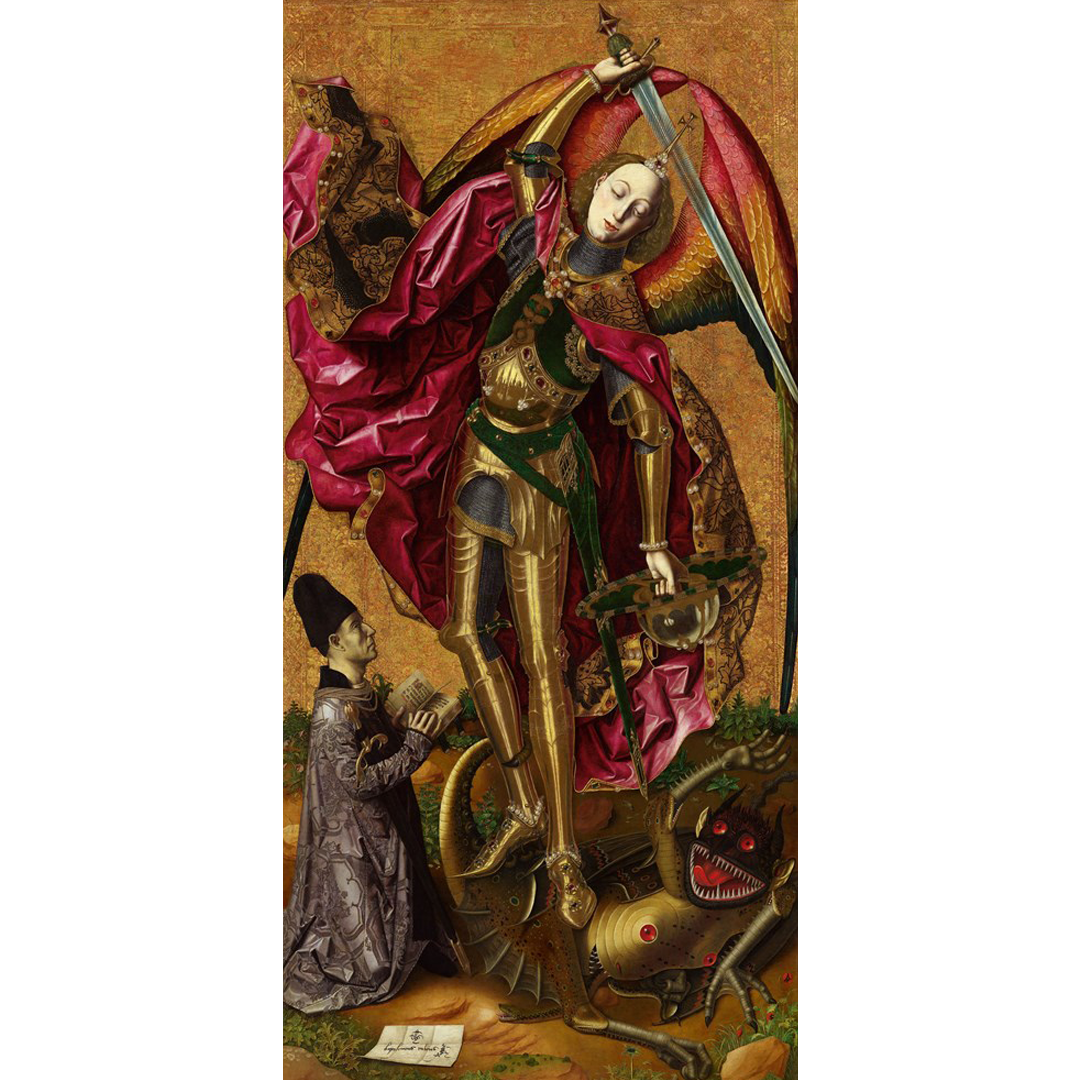
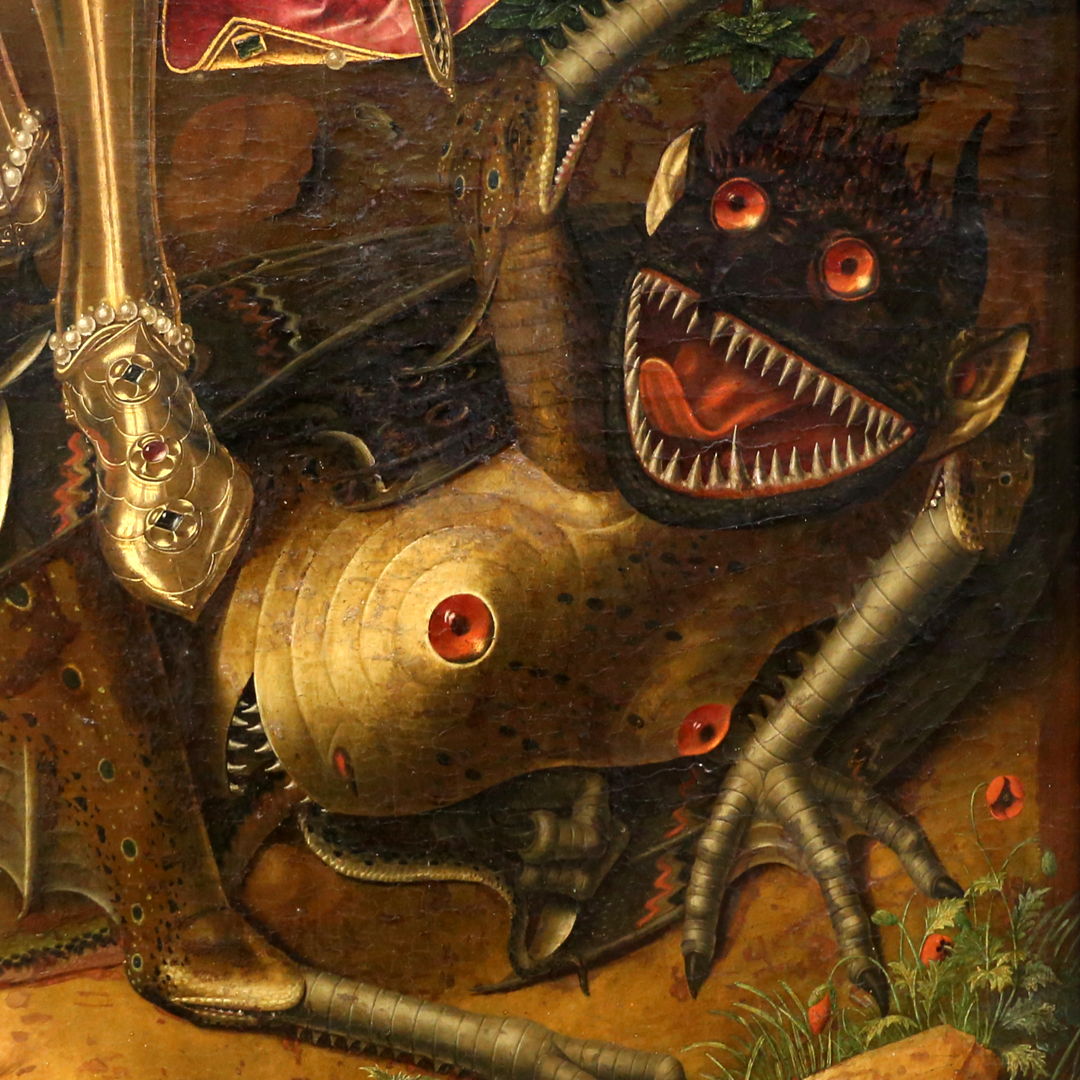

From Devil’s red eyes, horns and gaping mouth to its armoured and reptilian body, it forms a hideous echo of the warrior-angel, reminding that he was once an angel. Its contorted limbs are half snake and its whole torso is another face, with eyes for nipples and snakes slithering from a mouth in its belly.
Its clawed tail even curls around the saint’s armoured leg. Composite demons – those with bodies made up of parts of many creatures – were a traditional way of visualising evil in medieval art.
Source: The National Gallery
Infinite Evilness is a collection that explores different artistic representations of Evil throughout history, transformed into matrioshkas or russian dolls.